
The Training Is Finished. The Questions Are Not.
Picture a new CSR on a busy morning. They have watched the training videos, listened beside an experienced teammate, and practiced the greeting. Then a caller asks whether a previous repair changes the charge for today's visit. The trainer is helping someone else. The schedule is nearly full. The new hire knows how to open the booking screen, but not what they are allowed to promise. This is an illustrative situation, not a customer case study.
Before calling that a confidence problem, look at what the employee was given. Was the policy easy to find? Did practice include uncertainty, or only straightforward bookings? Was someone actually available to help once independent calls began?
HVAC CSR training should prepare a person to understand the request, use approved information, record an accurate next step, and recognize when help is needed. A completed training checklist is useful. It is not the same as demonstrated readiness.
Build onboarding around that distinction. The aim is not to leave a new person on training forever. It is to make the move into live work deliberate, supported, and fair.
Teach the Job the Person Will Actually Do
ACCA's published CSR training curriculum includes active listening, empathy, handling objections, and examples of inbound service calls.[1] Those are useful areas to practice, but your onboarding also needs the decisions specific to your operation: which work you accept, how availability is checked, what fees may be explained, and which questions require another role.
Start with a short reference the employee can use during a call. Include service-area rules, appointment types, approved fee language, the information needed for booking, and the current escalation route. Give each policy an owner and a revision date. Do not expect a new hire to resolve a disagreement between an old slide deck and a teammate's memory.
Keep the boundary between intake and diagnosis clear. Teach the CSR to capture the customer's description without translating it into a technical conclusion. For a reported safety concern, use your established emergency procedure and qualified escalation route; do not improvise troubleshooting as a training exercise.
Also define what a successful non-booking looks like. An out-of-area request, a duplicate call, or a question requiring a supervisor may need a clear explanation or accepted handoff rather than an appointment. Do not teach people that filling the calendar is the only acceptable outcome.
Show the Whole Call, Including the Work After It
ServiceTitan's HVAC customer-service guidance recommends a first-call protocol and access to the customer's history before answering; it also describes using recorded calls to coach CSRs.[2] Use that as a prompt to teach the work around the conversation, not just the words spoken during it.
Choose examples that show an accurate booking, a request that needs clarification, and a situation where the right action is to ask for help. Use authorized recordings under your company's access and privacy rules, or clearly labeled practice scenarios. Remove unnecessary customer details from reusable training materials.
Pause an example at the decision point. Ask what the customer needs, what is known, what still needs checking, and what the CSR can promise. Then show the related booking or follow-up record. A friendly call with an incomplete task is not the model you want a new person to copy.
Make shadowing active. Have the learner explain the reason for a decision and draft the next-step note in a practice environment. The trainer should review it before anything reaches a real customer or schedule. Watching someone navigate quickly does not tell you whether the learner can repeat the process.
Practice the Uncertain Moment Before It Is a Live One
Use a small set of realistic scenarios rather than one memorized perfect call. Include a routine request, a fee question the employee can answer from approved information, a full schedule, and a concern that belongs with a supervisor. These are suggested practice categories, not a required industry curriculum.
In one illustrative exercise, a customer asks for a same-day arrival the schedule cannot support. Have the trainee check availability, explain only the options the company can actually offer, and record the agreed next step. The goal is not to sound persuasive enough to make an unavailable appointment possible.
After the practice call, ask the trainee what felt uncertain. Give feedback on one observable behavior, then repeat the difficult part. If the employee used an outdated fee sheet, correct the reference before asking them to practice harder. If the reference was clear but the explanation was incomplete, coach that explanation.
Protect time for the trainer, too. Name a backup and decide which calls the learner can handle while the trainer is unavailable. A plan that requires constant supervision should include actual supervisory capacity, not just a name written on the onboarding document.
Use Readiness Gates Instead of a Calendar Alone
Set a progression from observation to practice, supervised live calls, and independent handling of defined call types. Move forward when the employee demonstrates the relevant behaviors consistently across reviewed examples. A target training date can help with staffing, but do not use it as the only release criterion.
Keep the readiness record simple. For each call type, record the behavior expected, an example reviewed, what support was needed, and the next coaching step. Useful checks include accurate intake, an approved explanation, correct scheduling, a usable note, and an accepted escalation when required. Reviewers should agree on those expectations before assessing the new hire.
Separate critical boundaries from polish. An unauthorized promise or a missed required escalation needs correction before independent handling of that situation. A greeting that sounds a little hesitant may need practice without blocking every routine call. Write down the distinction rather than changing it according to which manager is listening.
Readiness can be partial. Someone may be ready for routine maintenance bookings while still needing support on warranty questions. Make the boundary visible to the employee and the team assigning work. That is more useful than a single trained-or-not-trained label.
Coach From Evidence, Not the Most Memorable Call
Once independent work begins, review a mix of routine calls, uncertain situations, and strong examples. Do not build the employee's whole picture from the one complaint that reached a manager. Keep the call type, available appointments, and help available at the time alongside the review.
Use CallSense as a conversation-review resource within that process. Check flagged moments against the original evidence before giving feedback. A score or summary should help a manager find a coaching question, not become an unexplained verdict about a new employee.
Look at booking outcomes alongside behaviors the person controls. Keep eligible booking opportunities separate from administrative calls, and show the reviewed count with any rate. If the calendar had no suitable availability, investigate the capacity problem instead of treating every unbooked request as a training failure.
For missed opportunities, separate customer recovery from employee coaching. Give an appropriate person the follow-up task under your contact rules, then review the learning need with the CSR. Do not leave a customer waiting while the team debates a score, and do not count a coaching session as recovered revenue.
Let Onboarding Improve the Process, Too
Keep a short list of questions that repeatedly interrupt new hires. Review whether the answer was missing, hard to find, inconsistent, or simply not practiced enough. Each explanation points to a different correction. More training is not the answer to every confusing policy.
Give the employee a clear way to say that a reference does not match the live system. Ask the trainer what they keep having to explain from memory. Update the shared material, then check that the next learner can use it without the same rescue.
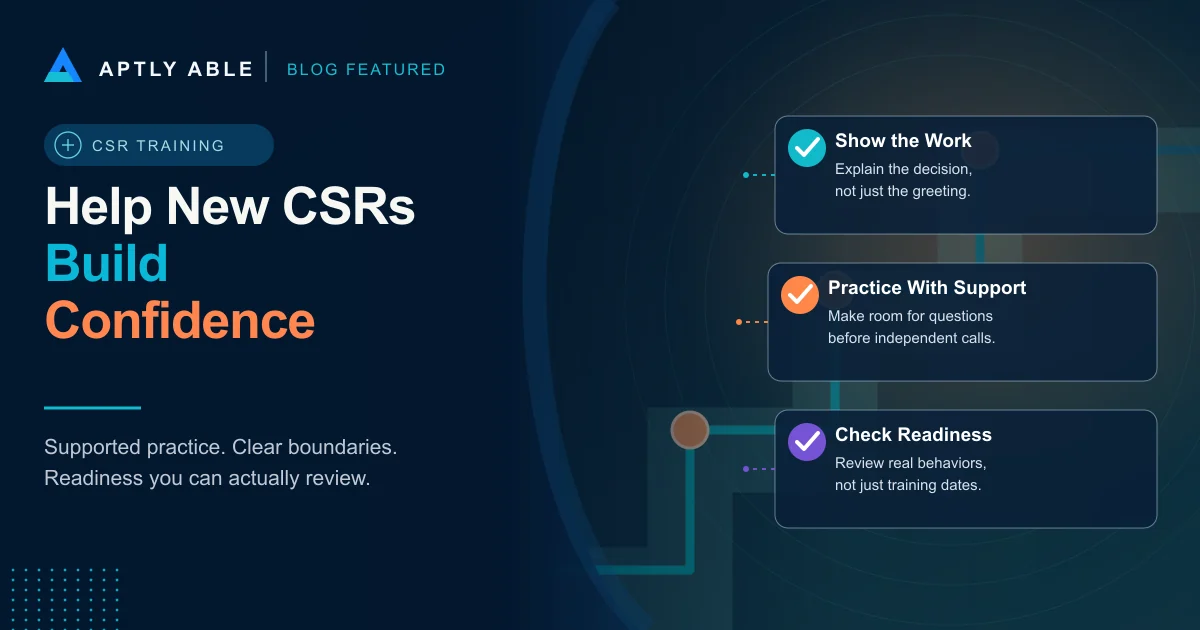
Start with one call type and one dependable support route. Show the work, let the employee practice it, review actual readiness, and stay available after release. That gives customers a clearer next step and gives your team something better than being told to sound more confident: a reliable way to do the job.
HVAC CSR Training FAQs
What should HVAC CSR training include?
Include listening and intake, service-area and scheduling rules, approved fee explanations, accurate records, escalation boundaries, and supported practice. Teach both the conversation and the follow-up work required to finish it.
How long should HVAC CSR onboarding take?
Use a staffing target, but release employees by demonstrated readiness rather than elapsed time alone. Check performance across relevant call types and keep support in place for situations they have not yet learned to handle independently.
How do you know a new CSR is ready for independent calls?
Review whether the employee can capture the request accurately, use approved information, make the correct booking or handoff, and document the next step without prompting. Define readiness by call type, with clear boundaries for situations that still need support.
Should new CSRs be judged only on booking rate?
No. Review booking results alongside eligible opportunities, appointment availability, call mix, accurate intake, and follow-through. Use evidence to distinguish an employee skill gap from a policy or capacity problem.
How can call analysis support CSR onboarding?
Use it to locate examples and moments for human review, then verify the underlying conversation before coaching. Pair the evidence with a clear behavior standard, practice, and a follow-up review rather than treating an automated score as the whole assessment.
Recommended next reads
Related Aptly Able resources
- CallSense Bring call evidence into specific, human-led coaching.
- Call Quality Calibration Align reviewers on the standard before grading a new employee.
- HVAC Call Booking Rate Keep booking outcomes and their denominators meaningful.
- HVAC Dispatch Handoff Checklist Connect the CSR's intake to the next team's work.
- Revenue Recovery Audit Review where conversations and follow-through are leaving opportunities unfinished.
Helpful external reading
- [1] ACCA: WOW – CSR Training Published curriculum covering active listening, empathy, objections, and examples of inbound service calls.
- [2] ServiceTitan: HVAC Customer Service First-contact protocols, customer-history access, and using recorded calls for CSR coaching.