
A Cancellation Is a Decision Point, Not One Outcome
A customer calls to cancel an HVAC appointment. The schedule opens up, the job changes status, and everyone moves to the next call.
That can look efficient. It can also close a real opportunity before anyone understands what happened.
Some customers need a different day. Some are worried about price. Some solved the immediate problem, called another contractor, or had a poor experience with the scheduling process. Those are not the same situation, and they should not all end with the same cancellation code.
The practical question is simple: does the customer still have a need, and is there a next step that would genuinely help? Appointment recovery starts there. It is not about arguing with someone who wants to leave. It is about making sure a customer who still needs help does not disappear because the process ended too quickly.
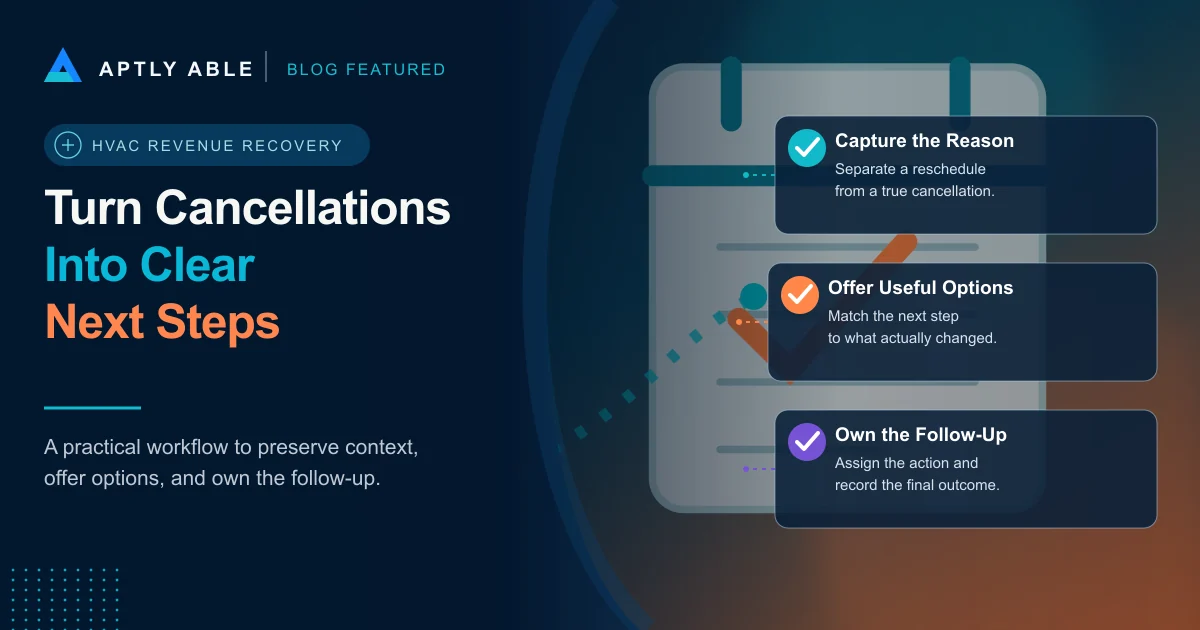
Separate Rescheduling From True Cancellation
When someone says, “I need to cancel,” the first useful question is whether they want to choose another time or close the request completely.
That distinction matters. A reschedule keeps the original need active. A true cancellation closes the appointment, but it may still leave a reason worth recording: timing, price, duplicate booking, competitor selected, problem resolved, service-area issue, or customer request to stop contact.
ServiceTitan's contractor guidance recommends defining reschedule reasons, naming the team members responsible, and using a consistent process.[1] It also recommends asking for the cancellation reason when a customer declines to reschedule and reviewing cancellation trends over time.[1]
Keep the reason list short enough that a CSR can use it during a real conversation. Add a note when the standard code does not explain the situation. The goal is not perfect categorization. The goal is enough context for the next person to act appropriately.
Offer Choices That Fit the Reason
A generic “Can we get you back on the schedule?” is better than no question, but it still makes the customer do most of the work.
Give choices that match what you heard. If timing changed, offer two realistic windows. If the customer is unsure about the visit, explain what will happen and what information the technician needs. If price is the concern, clarify the approved service-call terms without inventing a discount. If another person needs to decide, agree on when and how to follow up.
Here is an illustrative example, not a customer quote: “I understand Thursday no longer works. We have Tuesday afternoon or Friday morning available. Would either help, or would you prefer that we close the request?”
That question is clear, useful, and easy to decline. Pressure makes the conversation harder. Relevant options make the decision easier.
Preserve the Context When the Appointment Moves
A recovered appointment is not really recovered if the customer has to start over on the next call.
Keep the equipment or comfort issue, access notes, scheduling constraints, prior promises, and reason for the change attached to the job. If the company asked to move the appointment, say that plainly in the record. If the customer is waiting on a part, financing answer, landlord, or family decision, make that dependency visible.
The handoff should tell the next CSR, dispatcher, or technician what changed and what was promised. It should also show whether the new appointment is confirmed or merely proposed.
CallSense can help surface what was said in the original conversation and whether follow-up was promised. The operating record still needs an owner, due date, and outcome. Finding the conversation is useful; completing the next step is what protects the customer relationship.
Give Every Recoverable Cancellation an Owner
A vague follow-up plan sounds like this: “Someone will call them back.”
Name the person or staffed role. Set the due time. Define the expected outcome: rebooked, awaiting customer, escalated, closed by customer choice, or not eligible for follow-up. If the customer asks not to be contacted, record and respect that immediately.
Use a short recovery queue for customers who expressed a continuing need but did not select a new time. Work recent records first. A customer who cancelled this morning because of a calendar conflict needs a different approach from a record that has been closed for months.
The owner should have authority to offer the available options. Otherwise, the callback creates another handoff and another chance for the job to stall.
Use Open Capacity Without Creating Chaos
Cancellations affect two sides of the schedule. One customer may still need to be rebooked, while the newly open slot may help another customer who asked for earlier service.
Maintain an opt-in list of customers willing to accept an earlier appointment. Include the service type, geography, required skill, and how much notice the customer needs. When a slot opens, contact the best operational match rather than broadcasting the opening to everyone.
ServiceTitan's guidance describes using tags to identify movable appointments and keeping the technician informed when a customer moves into an earlier opening.[1] The important principle works in any system: the schedule change should preserve context for both the customer and the field team.
Do not fill a slot with a job that requires the wrong skill, unrealistic drive time, or equipment the assigned technician does not have. A full board is not the same as a workable board.
Measure Why Appointments Leave the Board
A single cancellation rate will not tell you what to fix.
Track customer-requested reschedules, company-requested reschedules, true cancellations, same-call rebookings, later rebookings, and closed requests. Then review reasons by location, service type, booking channel, time between booking and appointment, and whether the company changed the promised window.
Watch the time from cancellation to the first useful follow-up, but do not reward empty attempts. Measure whether the customer reached a clear outcome. That may be a new appointment, a documented later follow-up, a service escalation, or an honest closure.
Review the conversations behind unusual patterns. If customers repeatedly mention unclear arrival windows, the fix may be communication. If the company repeatedly moves maintenance visits during peak demand, the fix may be capacity planning. If price confusion appears before dispatch, the booking conversation may need clearer expectations.
Build a Recovery Process Customers Can Feel
Start with last week's cancelled HVAC appointments. Separate reschedules from closed requests. Identify the customers who still had a need, check whether anyone owned the next action, and close the loop where contact is still appropriate.
Then make the process repeatable: one short reason list, one clear rescheduling question, relevant options, preserved notes, a named owner, and a final outcome.
The best recovery conversation does not feel like a save attempt. It feels like the company listened, understood what changed, and made the next decision easier.
That is good customer service. It is also revenue recovery—because it protects demand the business already earned without treating the customer like a number on the schedule.
HVAC Cancelled Appointment Recovery FAQs
How should an HVAC company follow up on a cancelled appointment?
First confirm whether the customer wants to reschedule or close the request. Record the reason, offer relevant options, preserve the original context, assign a follow-up owner, and document the final outcome.
What should a CSR say when a customer cancels an HVAC appointment?
Acknowledge the change, then ask whether the customer wants another time or wants the request closed. If rescheduling is appropriate, offer two realistic options instead of pressuring the customer to keep the original appointment.
Which HVAC cancellation reasons should be tracked?
Use a short list such as timing conflict, company reschedule, price concern, competitor selected, problem resolved, duplicate booking, service-area issue, and customer requested no further contact. Add notes when the code does not provide enough context.
How quickly should a cancelled HVAC appointment be followed up?
Handle rescheduling during the original conversation when possible. If the customer still has a need but cannot choose a time, assign a specific follow-up deadline based on urgency, availability, and the customer's preference.
How do cancelled appointments affect HVAC revenue recovery?
A cancellation can represent demand the business already earned but did not complete. Separating reschedules from true cancellations and assigning recoverable requests a next step can preserve appropriate opportunities without increasing ad spend.
What metrics should an HVAC company use for appointment recovery?
Track customer and company reschedules, true cancellations, same-call rebookings, later rebookings, cancellation reasons, time to useful follow-up, and final outcomes. Review the underlying conversations before drawing conclusions from small samples.
Recommended next reads
Related Aptly Able resources
- HVAC Revenue Recovery See how Aptly Able connects database, phone, estimate, and field opportunities.
- CallSense Review customer conversations and find follow-up that still needs action.
- HVAC Dispatch Handoff Checklist Improve the handoff between the office, dispatch, and the field.
- HVAC Lead Response Time Separate a fast acknowledgment from accountable follow-through.
- Revenue Recovery Audit Find where existing opportunities are losing momentum.
Helpful external reading
- [1] ServiceTitan: Cancellations and Rescheduling Contractor guidance on defining cancellation reasons, rescheduling ownership, task management, and trend review.