A Price Question Is Still a Customer Conversation
The caller asks what it costs to have someone come out. The representative explains that a technician needs to look at the system. The caller asks again. Now the conversation is going in circles, and the call ends without a decision.
That is an illustrative situation, not a customer case study. But it is a useful place to start coaching: did the customer ask for a repair price, or just the price of getting an answer?
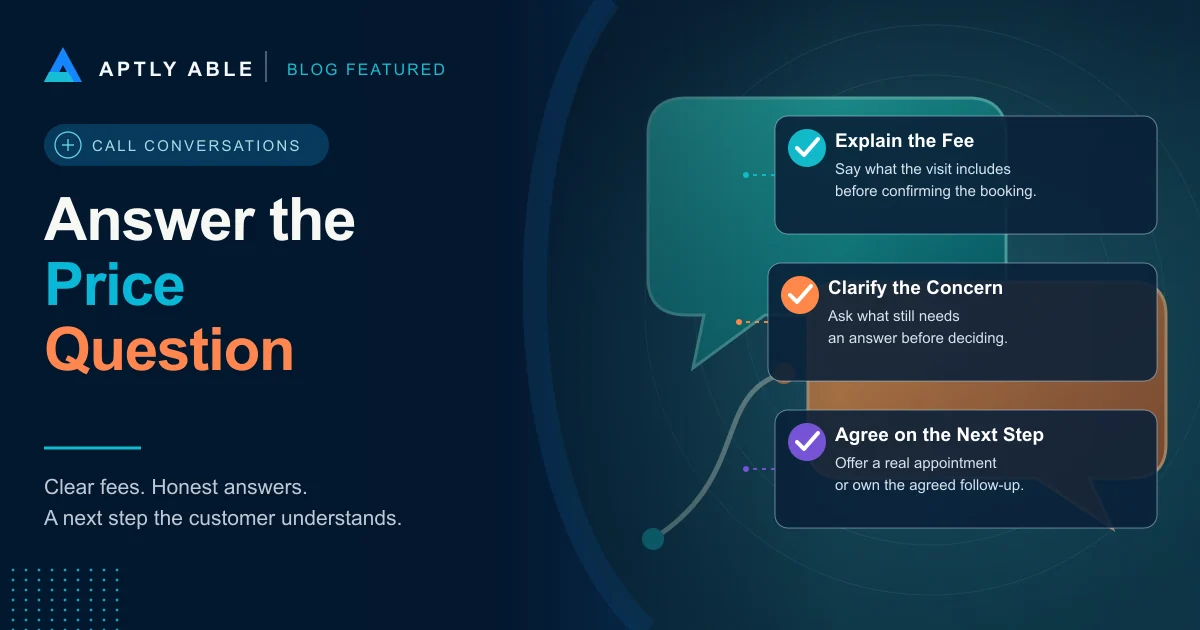
To handle HVAC price objections on the phone, answer the price question you can answer, explain what remains unknown, ask what is holding the customer back, and offer an appropriate next step. Disclose the actual visit fee before confirming the booking. Do not replace a clear answer with a sales pitch.
The goal is not to win an argument about price. It is to help the customer make an informed decision about the visit.
Separate the Visit Fee From the Repair Price
Start by asking what the customer wants priced. Is it a diagnostic visit for a system that stopped working, a maintenance appointment, or a replacement proposal? Those are different conversations. Use the company's approved scope and fee policy for the actual request.
If the diagnostic visit has a known fee, name it. Explain what that fee covers, what it does not cover, and whether the company credits it toward approved repairs. State after-hours charges or other applicable conditions before the customer agrees. Never imply a credit simply because another company offers one.
If the repair cannot be priced until the fault is identified, explain that limit without withholding the known visit cost. For replacement work, ENERGY STAR advises homeowners to expect a home evaluation and obtain written, itemized estimates.[1] That supports explaining the evaluation process; it does not justify inventing a final system price from a short phone description.
Before anyone uses the example language below, the manager should supply the real fee, exact scope, credit policy, and approval process. These are conversation patterns, not promises to copy into a business whose policies differ.
Give the Customer an Answer Before Asking for the Booking
Here is illustrative wording for a company that charges for diagnosis and requires approval before repair: Our diagnostic visit has a set fee. Let me explain the exact amount and what it includes. The repair price is separate because we have not identified the fault yet. After the diagnosis, we explain the proposed repair and price before you decide whether to authorize it.
In the actual call, replace that general fee reference with the approved amount immediately. Do not make the homeowner book first to learn it.
Then ask a useful question: Is your main concern the cost of the visit, the possible repair total, or whether we can get there when you need us? That question creates room for a real answer instead of treating every hesitation as the same objection.
If the customer asks again what the visit costs, answer again plainly. More explanation is not always more clarity.
When the Customer Says Someone Else Is Cheaper
Do not start by criticizing the other contractor. You do not know their scope, their policy, or what the customer was quoted.
An illustrative response is: That makes sense to compare. Do you know whether that amount is for the visit, the diagnosis, or the completed repair? I can explain what our amount includes so you are comparing the same thing.
For a replacement proposal, ENERGY STAR recommends comparing cost, energy efficiency, and warranties in written, itemized estimates.[1] Keep that advice in its proper context: it is guidance for comparing proposals, not proof that your company's higher quote is automatically the better choice.
If the homeowner already has a written estimate from your company, route the question to the person who can explain or revise that proposal. Do not make the booking representative defend technical scope they cannot verify. An existing unsold estimate belongs in the estimate follow-up process, not a new diagnostic-fee script.
And if price remains the deciding factor, respect the answer. A discount outside the representative's authority is not a recovery strategy.
When the Real Question Is What Happens After the Visit
A homeowner may be willing to pay for diagnosis but uncomfortable authorizing an unknown repair. Ask whether that is the concern rather than assuming it is.
Where company policy supports it, explain the decision point: paying for the diagnostic visit does not mean agreeing to every repair proposed afterward. Be equally clear about any amount still owed if the customer declines the repair. Do not say there is no obligation if a visit charge remains payable.
If the caller asks for a maximum total you cannot establish, say what you can confirm and who can resolve the rest. Do not guess a repair range just to keep the call moving. If approved pricing information is available for a clearly defined service, share it with its scope and conditions rather than manufacturing uncertainty.
If the customer needs financing information, use only the company's current approved terms and hand off questions you cannot answer. Never promise approval or describe a payment as the full cost of the work.
Offer a Real Next Step, Not a Pressure Close
Once the question is answered, ask whether the customer wants to review available appointments. Offer times that are actually available and within the company's service area and scope. Do not create urgency with an invented last opening.
Before confirming, restate the agreed visit, applicable fee, arrival window, contact details, and any approved preparation instructions. Follow the company's safety escalation procedure when the situation requires it; a sales conversation is not a substitute for qualified safety guidance.
If the customer needs time, ask whether a follow-up would be helpful and when. Record the agreed channel, time, responsible person, and unresolved question. Follow the company's contact-permission rules, and stop when the customer declines further contact.
A promised callback needs an owner. A note that says price shopper does not tell the next person what to do.
Coach the Missed Answer, Not the Label
For call review, use specific questions. Was the known fee stated? Was the difference between diagnosis and repair clear? Did the representative ask what concerned the customer? Was an accurate next step offered? Was a promised follow-up assigned?
Record the reason the call remained unbooked in plain language. Fee declined, appointment unavailable, service outside our scope, requested estimate clarification, and agreed callback tell you more than one catch-all price objection category. Preserve uncertainty when the caller never gave a reason.
Review the conversation before deciding that the representative failed. If the fee policy is confusing or the schedule has no suitable opening, fix that constraint. If a clear answer was available but never given, coach that moment with an example the representative can use on the next call.
Use CallSense as the entry point for reviewing these phone opportunities, not as permission to accept an AI interpretation without checking the conversation. Keep recordings and customer details within the company's approved access and retention controls.
When evaluating the change, compare qualified opportunities and their booking outcomes alongside cancellations and fee misunderstandings. A booking secured through confusion is not the result you want to repeat. This is a proposed review method, not a claim of a guaranteed conversion lift.
Start With the Calls That Already Asked About Price
Choose a recent group of unbooked, otherwise eligible calls and review what the customer actually asked. Look for an unanswered fee question, an unclear approval step, or a callback that was promised but never owned. Check whether the need is still open before making any appropriate follow-up.
Then give the team one clear fee explanation, one useful question about the customer's concern, and one person responsible for each agreed next step. Practice those conversations against the real company policy.
You do not need a clever way to avoid talking about price. You need a team that can explain it honestly, recognize what the customer still needs, and follow through on the answer.
HVAC Price Objection FAQs
How should an HVAC representative handle a price objection?
Answer the known price question, clarify what is not yet priced, ask what concerns the customer, and offer an appropriate next step. Use approved fees and policies rather than an improvised discount or an unsupported repair quote.
Should you disclose the HVAC diagnostic fee before booking?
Yes. As a customer-service practice, state the actual fee, what it covers, any applicable additional charges, and the company's repair-credit policy before confirming the visit. Do not imply the diagnostic fee includes the repair unless that is true.
What should you say when another HVAC company is cheaper?
Acknowledge the comparison and ask whether both prices cover the same visit or work. Explain your own scope without criticizing an unverified competing offer. Respect the customer's decision if price remains the deciding factor.
Should an HVAC company give repair prices over the phone?
Share approved prices for clearly defined services when available. If the fault or scope is not established, distinguish the known visit fee from the unknown repair price and explain how the customer will receive and approve a proposal.
What should be recorded after an unbooked price call?
Record the customer's stated concern, the fee and scope explained, the unresolved question, and any agreed follow-up with an owner and due time. Do not substitute a price shopper label for the customer's actual reason.
Recommended next reads
Related Aptly Able resources
- CallSense Explore call intelligence for finding missed next steps and specific coaching opportunities.
- HVAC Call Booking Rate Measure qualified booking opportunities without treating every incoming call as a sales lead.
- What Is Bid Recovery? Use a different follow-up process when the customer already has an unsold estimate.
- HVAC Revenue Recovery Connect better phone conversations to the broader recovery of existing opportunities.
- Revenue Recovery Audit Identify where customer questions, bookings, and promised follow-up stop moving forward.
Helpful external reading
- [1] ENERGY STAR: 10 Tips for Hiring a Heating and Cooling Contractor Consumer guidance on home evaluation and comparing written, itemized proposals by cost, efficiency, and warranty.